
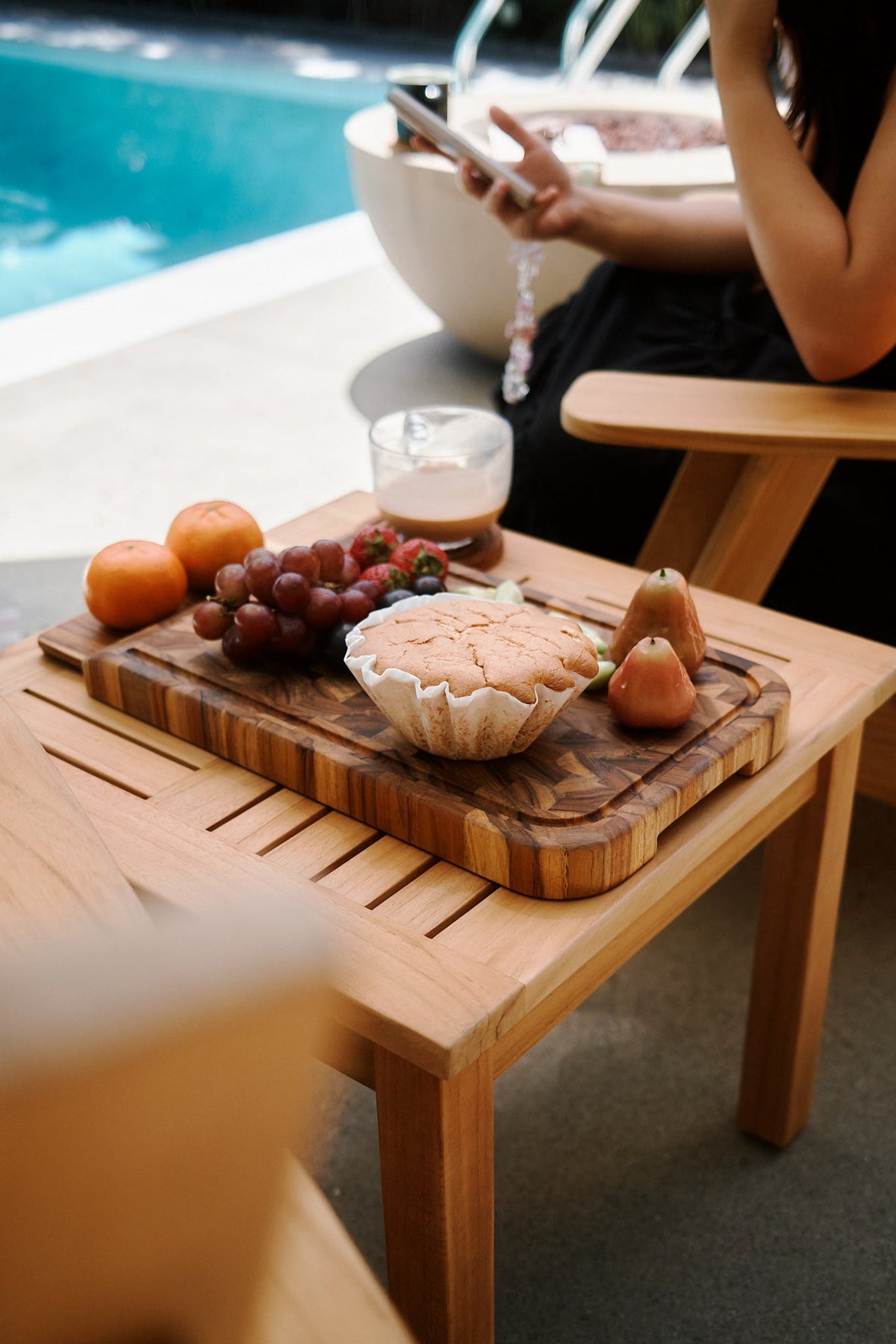
A charcuterie board is one of the few dishes where the serving surface is as important as the food itself. The board is part of the presentation. A teak board, with its warm grain and natural character, makes everything on it look better.
Here is how to build one worth serving.
Start with the Right Board
For a charcuterie spread, you want enough surface area to arrange things without crowding, and enough visual appeal to work as a centrepiece.
- Size: A minimum of 35–40cm in any direction for 3–4 people. For larger gatherings, go bigger or use two boards.
- Shape: Rectangular boards give the most usable space. Organic shapes like The Lemon add visual drama and work well for smaller servings or as a secondary board.
- Why teak: Natural oils mean the board will not stain easily from soft cheeses or fruit juices. Wipe clean with a damp cloth after use.
What to Include
- Cheeses (2–3 varieties): Aim for variety in texture and flavour. One soft such as brie or camembert, one semi-firm such as gouda or manchego, one aged or hard such as parmesan or aged cheddar.
- Cured meats (2 varieties): Prosciutto or Serrano ham folded loosely, salami fanned out. The visual texture of folded meat is part of the composition.
- Crackers or bread: A mix of plain crackers and a sliced baguette. Keep them to the edges or cluster in a corner so they do not dominate the centre.
- Fruit: Grapes, sliced figs, or fresh berries for colour. Dried apricots and dates for sweetness and texture contrast.
- Accompaniments: A small bowl of honey, a ramekin of whole-grain mustard, a handful of nuts. These fill gaps and add flavour bridges between the other elements.
How to Arrange It
Build from the largest elements down to the smallest. A board that looks considered rather than assembled comes from this sequence.
- Place small bowls or ramekins first. These anchor the arrangement and create visual structure.
- Position cheese wedges or slices. Space them so each one has room to be cut from.
- Add cured meats in loose, generous folds between the cheeses.
- Fill larger gaps with crackers and bread.
- Add fruit and nuts last. This is where colour comes in. Grapes and berries especially. Do not be too precise — a natural scatter looks better than a geometric placement.
The goal is abundance: a board that looks full without looking forced. Leave no visible gaps, but do not compress or overcrowd.

After the Board: Cleaning Your Teak
After a charcuterie spread, wipe the board down with a damp cloth. If soft cheese has sat directly on the surface, a small amount of mild soap is fine. Dry the board upright and let it air fully before putting it away.
The natural oils in teak mean most food contact wipes clean without effort. A brief rinse and dry is usually all it takes. For more detail on keeping your board in good shape, see our full teak care guide.
Every Wooden Decor board is handcrafted from recycled teak in Vietnam. Food-safe finish. Built to last a lifetime.