
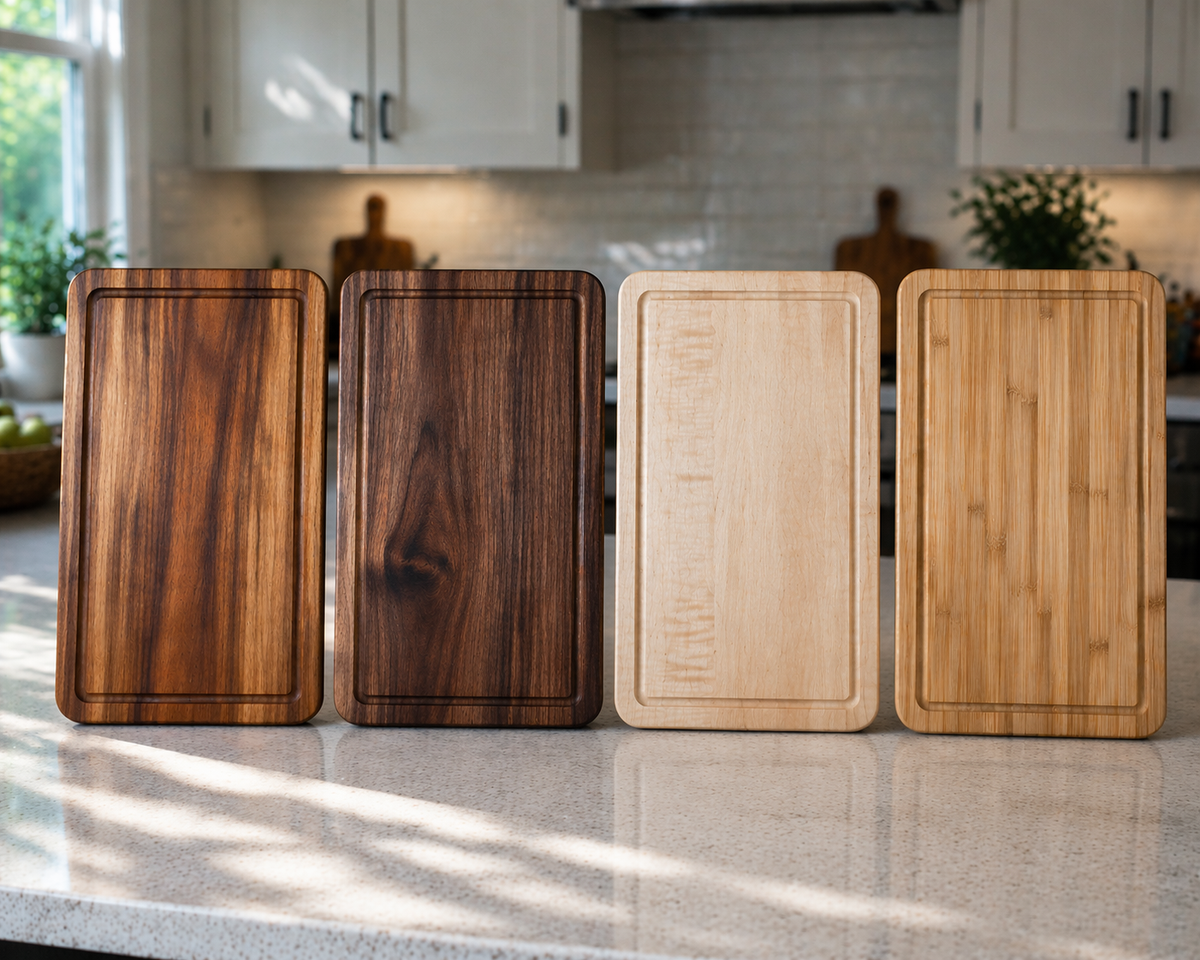
Walk into any kitchen store and you'll find boards in walnut, maple, bamboo, teak. Each one comes with its own price tag and its own claims about durability. Here's an honest breakdown, material by material.
Teak: The Low-Maintenance Workhorse
Teak has shown up in outdoor furniture, boat decks, and fine woodworking for centuries. The wood carries its own natural oil in the grain, so it doesn't need constant conditioning to hold up.
- Hardness: Around 1,070 on the Janka scale. Hard enough to resist knife marks, soft enough to stay easy on your blades.
- Natural oils: High oil content makes teak resist moisture on its own. It won't warp easily, absorb odors, or demand frequent oiling.
- Maintenance: Rinse with water, dry upright, oil two to three times a year. That's it.
- Appearance over time: Teak develops a rich patina. A board you've used for three years looks better than the one you just bought.
- Sourcing: We use responsibly sourced teak.
Walnut: Beautiful, But Demanding
Premium kitchen brands love walnut, and that dark chocolate grain earns it. If you want a showpiece board, walnut makes a strong case.
Walnut sits around 1,010 on the Janka scale, slightly softer than teak, and shows knife marks faster over time. It lacks teak's natural oil content, so it needs monthly conditioning to avoid drying and cracking. Skip the maintenance and the board will crack or warp on you. Walnut suits people who enjoy the ritual of wood care. It asks more from you than a board you can use and forget.
Maple: The Professional Kitchen Standard
Most commercial butcher blocks and professional countertops run on maple. Hard, tight-grained, neutral in color, and built for kitchens where function comes first.
At roughly 1,450 on the Janka scale, maple is the hardest of the four. It absorbs moisture readily and needs regular oiling plus immediate drying after every use. Uneven moisture exposure warps it fast. Maple fits serious prep cooks who treat board care as part of the routine, not an afterthought.
Bamboo: The Sustainable Myth
Bamboo markets itself hard on sustainability, and the raw material does grow fast without replanting. But as a cutting surface, it comes with trade-offs nobody mentions in the marketing.
Bamboo runs harder than most hardwoods, which sounds like a win until you realize it's brutal on knife edges. Most bamboo boards aren't solid wood at all. They're compressed fibers bonded with adhesive, and the quality of that adhesive varies a lot between brands. The wood dries out fast, cracks, splinters, and can't go near a dishwasher. Bamboo's sustainability story only holds up if you ignore the formaldehyde-based adhesives in most boards. Look at the full lifecycle, not just the raw material. Bamboo works for budget-conscious buyers who want a plant-based option and don't mind the trade-offs.
How They Compare
| Teak | Walnut | Maple | Bamboo | |
|---|---|---|---|---|
| Hardness (Janka) | ~1,070 | ~1,010 | ~1,450 | Very hard |
| Natural oils | High ✔ | Low | Very low | None (adhesive) |
| Knife-friendly | Yes | Yes | Yes | No, too hard |
| Moisture resistance | Excellent | Moderate | Low | Low |
| Maintenance | Low | High | High | Moderate–High |
| Appearance over time | Gets better | Needs care | Yellows/stains | Can crack/splinter |
| Sourcing | Responsibly sourced ✔ | Varies by source | Varies by source | Adhesive concerns |
| Best for | Everyday use + beauty | Showpiece boards | Pro prep work | Budget / casual use |
The Verdict
Walnut looks stunning. Maple takes a beating in a pro kitchen. Bamboo costs less upfront. But if you want durability, low maintenance, knife-friendliness, and real beauty over time, teak delivers all four without asking much back. It won't demand weekly oiling. It won't warp the first time it meets moisture. It won't dull your knives. And it won't peak on the day you bring it home. A well-made teak board gets better every year you use it. Most kitchen tools can't say that.