
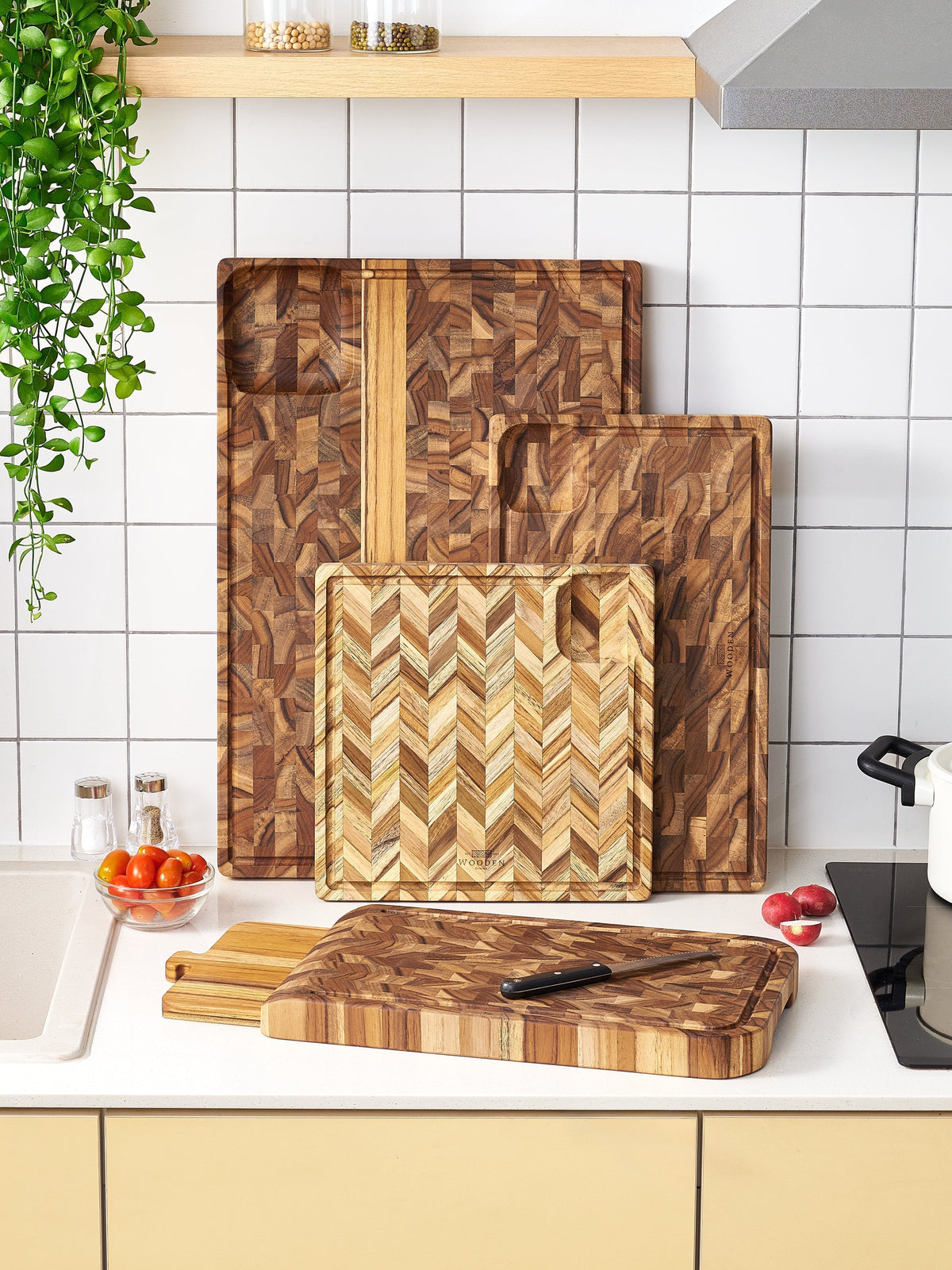
There is no shortage of opinions on the best wood for a cutting board. Walnut enthusiasts will point to the grain. Maple devotees will cite the hardness. Bamboo fans will mention sustainability. We will mention teak — and explain exactly why.
Teak Carries Its Own Oil
Most hardwoods used for cutting boards are dry by nature. They need frequent oiling to prevent cracking, warping, or moisture absorption. Without consistent maintenance, they deteriorate. Teak is different. It contains a high concentration of natural oils and silica within the grain itself — the same properties that make it the material of choice for boat decks, outdoor furniture, and structures that must survive years of weather and moisture. In a kitchen context, this means teak is inherently resistant to the conditions that degrade other woods: water, humidity, and the occasional forgotten rinse.
It Is Hard Enough to Work, Soft Enough to Be Kind to Knives
Teak scores around 1,070 on the Janka hardness scale — harder than walnut, more forgiving than maple or bamboo. That balance matters. A surface that is too soft marks easily and degrades quickly. A surface that is too hard — like bamboo — is harsh on knife edges and causes blades to dull faster than they should. Teak sits in the sweet spot: it stands up to daily chopping without punishing the knives in the process.
Teak Resists Bacteria Naturally
Research into teak's natural antimicrobial properties has shown that its high oil content creates an environment where bacteria struggle to survive on the surface. Wood in general outperforms plastic on this measure once the science is properly examined — but teak's natural oils add an extra layer of protection that dry woods cannot replicate. For a food preparation surface used daily, that matters.
Teak Ages Better Than Any Other Kitchen Wood
This is the quality that separates teak from almost everything else on a kitchen counter. Most cutting boards look their best the day you bring them home. With use, they accumulate marks, lose their sheen, and start to look worn. Teak reverses that logic. A well-used teak board develops a patina over time — the grain deepens, the colour warms, and the surface takes on a richness that a new board simply does not have. The marks of use become part of the character, not evidence of wear.
"We have customers who contact us two years after purchase to say their board looks better now than it did when it arrived. That does not surprise us. That is teak."
It Is Sustainable When Sourced Responsibly
Teak has a complicated history — historically, demand for it drove significant deforestation across Southeast Asia. That is a real concern worth acknowledging. At Wooden Decor, we sidestep that problem entirely. Every board we make uses recycled teak — offcuts and leftover wood from furniture production that would otherwise be discarded. We are not cutting down new trees. We are giving a second life to wood that already exists. That is not a marketing claim. It is the foundation of how we make things.
How to Care for a Teak Cutting Board
Teak requires less maintenance than almost any other cutting board wood. Hand wash with warm soapy water and dry upright after each use. Apply food-grade mineral oil or a cutting board conditioner two to three times per year, or whenever the surface looks dry. Never soak it in water or put it in the dishwasher. That is the full list.
The Bottom Line
Every wood brings something to a cutting board. But teak brings the most complete package: natural oil, the right hardness, moisture resistance, natural antimicrobial properties, and a quality that genuinely improves with age. When you are choosing a board you will use every day for years, those properties compound. The best cutting board is not the one that looks best on day one. It is the one that earns its place over time. Teak earns it.